Where is Your Home for Random Ideas?
Clients feel frustrated not knowing if they jotted random ideas on envelopes, in their phone, or a to-do list.
Put ideas in homes the same way you put physical items in homes.
1- Pick a home now (Notebook? Phone notes?)
2- Separate To-dos from Ideas. To-dos require action; Ideas are only possibilities so far.
3- Resist scribbling randomly—take one minute to put it in its home.
TIP: If random notes IS your system, place notes in your “inbox” and process weekly to then re-home them.
A system will work for you if you work the system.

A Simple Email Organizing Method
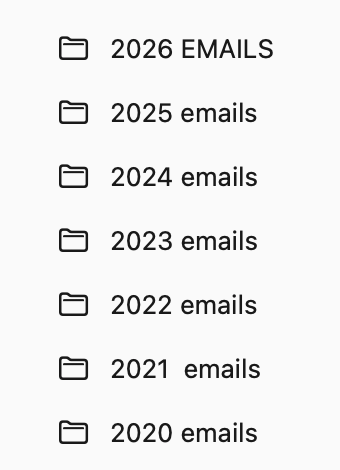
Does this sound familiar — You’ve responded to an email but aren’t ready to delete it, so it sits there. Multiply that by every “not yet” email, and you’re scrolling past message after message, re-deciding each one, just to find what still needs a response.
Instead, drag it into a folder titled the current year — “2026.” Your computer’s “search” feature finds it anytime you need it. What remains in your inbox are emails still needing a response — Your clear working container.
TIP: Treat folders like tax archives — keep 6 years, and each January, delete the oldest.
Pull It All Out!
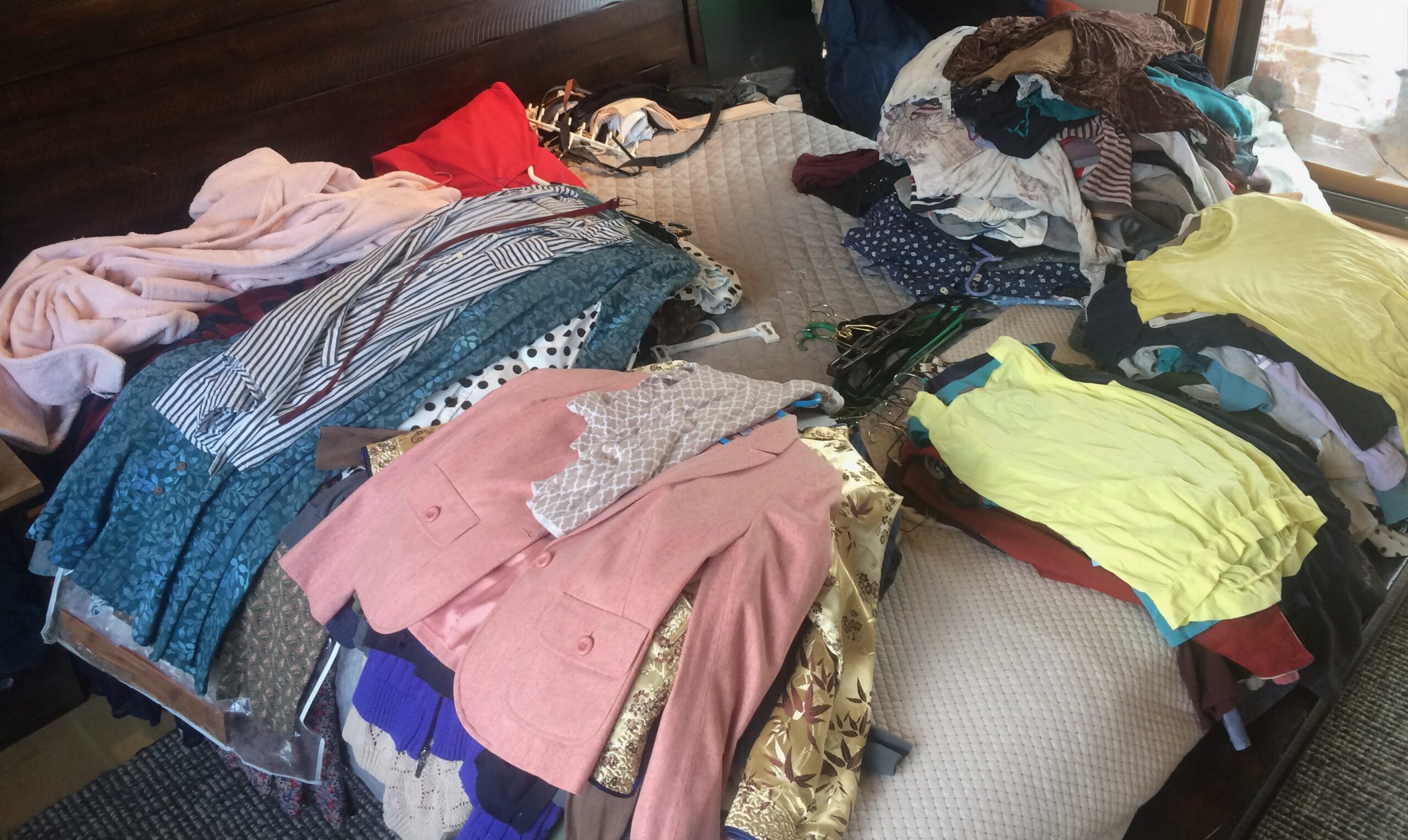
If your goal is to only keep what serves you today, pull everything out of the area you’re organizing. For example, clients downsizing their clothing are tempted to flip through hangers, making decisions. In my 20 years of organizing, clients rush through and default to “Keep”, yielding an unproductive outcome. Clients are more discerning when all items are removed and placed in a neutral area (bed or table) and then decide one by one.
The satisfaction you’ll feel placing each item back in your closet, knowing you’ve CHOSEN it to take up space in your life, can be huge.
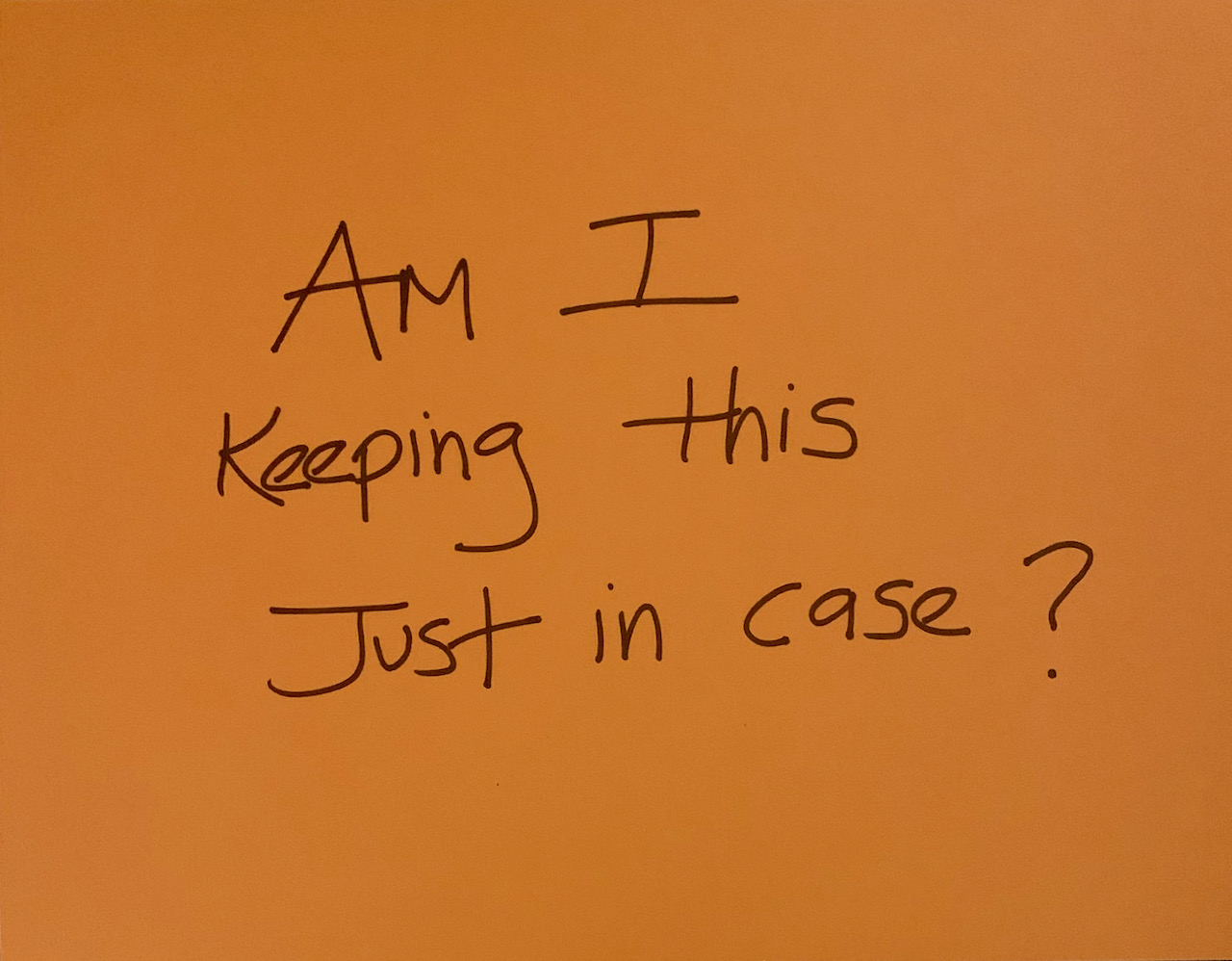
Am I Keeping This “Just in Case”?
My clients love this powerful concept from theminimalists.com~
(paraphrashed) If you’re holding onto an item “just in case” but rarely use it, you can let it go if it can be replaced for less than $20 in under 20 minutes.
 $20 in under 20 minutes.
This doesn’t refer to heirlooms. It refers to items you keep “in case they may be useful someday to someone,” even though they haven’t been useful to you yet.
This is about letting go of fear that keeps us holding onto things that don’t serve us.
TIP: Very simply, ask yourself “Am I keeping this item just in case?”
Attachment to Possessions? A Letting-Go Experiment
If you yearn to let go of something but haven’t, try this experiment:
Choose 1 low-stakes item. Ask + write:
- Attachment level (1–10)?
- How bad would letting go feel (0–10)?
- How long would it take to process that feeling?
- What’s worst outcome — how hard to recover if worst happened (0–10)?
Donate or toss it. Then ask + write:
- I feel ________
- Distress rating (0–10): ________
- What did I learn?
- How will I move forward?
Anticipation is usually worse than reality. In 20 years with clients, the more they practice wise discernment, the more freedom they experience.
(Paraphrased from Buried in Treasure. NOT an affiliate link)
- 1
- 2
- 3
- …
- 9
- Next Page »